


Fieldwork! Atami Summit – Day 2

Hearing the “Real Voices” of Atami on the Shopping Streets
On September 1, Day 2 of the Atami Summit began.
After preparing on Day 1, we finally headed out into the streets of Atami for our fieldwork. Atami is a popular tourist destination, but like any other city, it also faces various challenges. To hear directly from local residents and learn more about these issues, we spent the entire day exploring the city and listening to the voices of the people who live and work there.
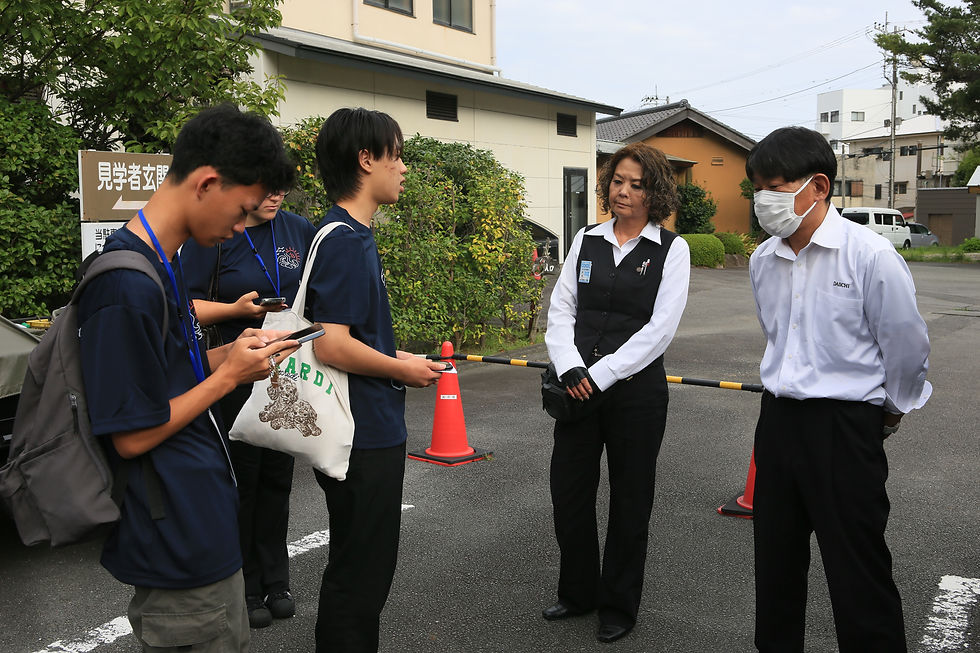

As part of the fieldwork, we split into 12 groups and traveled to different locations around Atami. In this article, I will introduce the attractions and challenges of Atami through the experience of my group.
First, we walked through Atami Ginza Shopping Street. It is a lively area with traditional shops that have been around for many years, as well as cafés, souvenir shops, and more.
There, we interviewed local shop owners and tourists to hear their thoughts and experiences.
During the interviews, the shop owners told us about two major issues: the declining birthrate and aging population, and young people leaving Atami.
One comment that particularly stood out to us was that “the number of children is decreasing every year while the population continues to age.” We also heard that even when children grow up, there are not enough diverse job opportunities in Atami, so many young people leave for cities such as Tokyo when they go on to higher education or start working.
When we spoke with tourists, some said that there were not enough taxis, making it difficult to get around to different tourist attractions. We often hear that transportation to Atami is convenient, so we had not expected that getting around after arriving in Atami could be a challenge.
Hearing these voices gave us a valuable opportunity to experience firsthand the sense of concern about the future that the city is facing.。

Next, we visited the area around Atami Station.
We also interviewed people visiting Atami Station. Tourists mentioned Atami’s hot springs, delicious food, and convenient transportation as some of the city’s attractions. On the other hand, local residents pointed out new challenges, such as vacant houses and overtourism.

Finally, we visited Atami Castle. From there, we could enjoy a spectacular view overlooking the city of Atami and the sea. Looking out from the castle tower, we saw many boats traveling across the sea. I wondered, “Where are those boats going?” So I looked it up and found out that they were heading to Hatsushima Island.
I had never known this before. It made me wonder: “Why do young people know about popular sweets like Atami Pudding and new spots around the city, but know less about places that have been there for a long time, such as Hatsushima and Kinomiya Shrine?”
Why do new things attract so much attention, while the charm of traditional buildings and the natural beauty that have existed for generations can be harder to discover?
I still do not know the answer, but I hope to think about this question together with our international members during our group discussions starting tomorrow.
Through a full day of fieldwork, we were able to rediscover the attractions of Atami while also learning about the challenges the city faces. By speaking directly with local residents and tourists, we were able to hear their real voices—things that we could not fully understand through websites or books.
Today’s fieldwork was filled with many encounters and learning experiences. We hope to use the voices and insights we heard today when preparing our presentation materials tomorrow, and make the most of the rest of the summit.

